


reading time – 5 min

Introducing children to music

Have you watched your little one sway to a song they love, or hum a nursery rhyme? It's magical, isn't it? You may be wondering how to develop their musical ear and their sense of rhythm. At Petit Picotin, we believe that music is first and foremost about pleasure and sharing. And good news: introducing your child to music is not complicated!

Why introduce children to music?

Let's be honest. We don't introduce our children to music so they can give a concert at a stadium (although, who knows!). We do it because it enriches their development: music helps develop their brain, they learn to express their emotions, they gain confidence when they manage to play a song, they learn perseverance. And besides, it's simply beautiful to see — a child singing with joy, dancing, is a fulfilled child. And that's priceless.

At what age should you start learning music?

Good news: there's no real "perfect age" to discover music. From the very first months, babies are already sensitive to the sounds, voices and rhythms around them. Then, as they grow, they naturally develop their listening skills, their sense of rhythm and their musical curiosity. The key is not to start early at all costs, but rather to respect the pace and your child's desire. Singing together, listening to music, dancing in the living room or trying out a first instrument… every little experience counts and helps gently awaken their musical world.

Our ideas for introducing children to music at every age

from 0 to 12 months

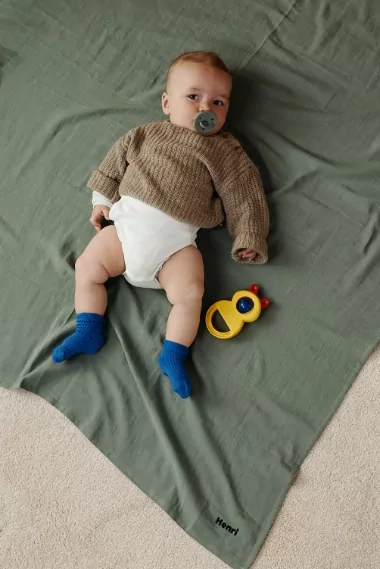
At this age, your baby can't do very much, but they listen. And that's already huge. Hum or sing to your baby at bedtime, during bath time, or during diaper changes — it creates a deep emotional bond and your voice is a source of security for your baby. And yes, even if you don't have a beautiful voice (spoiler: your baby really doesn't care). Your voice is the most beautiful one to them. Also show them the sounds of nature: birdsong, the sound of rain… It shows them that there are different sounds everywhere! You can also get them used to it by regularly playing music at home: soft classical music, lullabies, or soothing ambient sounds…

from 1 to 3 years

From 12 months, your child explores the world by touching, repeating and testing. This is the ideal moment to show them that music is everywhere. On a walk or at home, have fun spotting everyday sounds: birdsong, the rustle of leaves or a passing car. Also rely on a few simple nursery rhymes like Frère Jacques, repeated regularly at home or in the car. Introduce them to different styles of music: classical, pop, jazz… And for their first "instruments," no need to invest: pots, spoons or bottles filled with water will do just fine!

from 3 to 6 years

From age 3, your child has better concentration, better fine motor skills, and a genuine desire to learn. This is the time to explore the first real instruments and, if the child wishes, to take lessons.

Which instrument to suggest?
- The ukulele has a small format (suited to children's hands), sounds lovely even when clumsy, and can be learned in just a few months.

- The piano has visible and logical notes, allows learning the different notes, and is a fairly frustration-free instrument for children.

- You can also opt for the recorder, which is inexpensive, quick to learn, and portable. It's often what children learn at school anyway.

At first, let them fumble, experiment and make noise. Learning comes later. At this age, you can already take your child to children's concerts, shows with music, to introduce them to live music and new genres.

How to choose the right instrument for your child?

Listen to their wishes
The best instrument is the one that makes your child want to play. Even if you dreamed of a little pianist, if they prefer the guitar or the ukulele, follow their lead. A motivated child practices with pleasure and perseveres much more easily..

Try before you buy
Before investing in an expensive instrument, consider renting, borrowing or taking trial lessons. This allows your child to discover the instrument at their own pace before committing for real.

Start with a reasonable budget
No need to buy a professional model from the start. A simple, good-quality instrument is more than enough to get started. You can always invest more if the passion grows over time.

Your little ones' phrases

« Daddy, what kind of working are you going to do? »
– Mila, age 4

« I drank the pineapple »
– Paul, age 3

« The first one who won has lost! »
– Paul, age 4

AUTHOR

leave a comment

SHARE THIS ARTICLE