













reading time – 5 min

Baby teething: symptoms and tips to soothe them

Rosy cheeks, restless nights, little hands trying to chew on everything in sight… there's no doubt about it, baby's first teeth are starting to make their appearance! And even if this stage is completely normal, it can sometimes be uncomfortable for little ones… We're sharing all our tips for recognizing the signs of teething and helping baby get through this stage more peacefully.

When do baby's teeth come in?

The first teeth generally appear around 6 months. But as is often the case with babies, there are no hard and fast rules! Some children see their first tooth come in as early as 4 months, while others may have to wait until 9 or 10 months. The order in which teeth appear, however, remains almost always the same:

- The 8 central and lateral incisors appear between 6 and 16 months
- The 4 first molars come in between 13 and 24 months
- The 4 canines arrive between 16 and 23 months
- Finally, the 4 last molars come in between 23 and 33 months

In total, teething generally spans from baby's 6 months to around 3 years of age. Quite the adventure… filled with lots of cuddles!

What are the symptoms of teething?

Even before a little white tooth appears, certain signs can tip you off. Baby may notably:

- Drool much more than usual
- Need to chew constantly
- Be more fussy or irritable
- Sleep less soundly
- Have red cheeks
- Show slightly swollen gums
- Develop a small bluish bubble on the gum, known as an "eruption cyst"
- Have a mild fever

However, please note: teething does not normally cause a high fever. If the temperature exceeds 38.5°C or if baby seems very tired, it is best to consult your doctor or pediatrician.

Our tips to soothe baby

Comfort and soothe

When teeth are working their way through, baby often needs to be reassured. A cuddle, skin-to-skin contact, some rocking or simply your presence can already help calm them a great deal. Between saliva and rubbing, the skin around their mouth can also quickly become red and dry. You can apply a small amount of liniment or baby-friendly moisturizing cream several times a day to protect their skin.

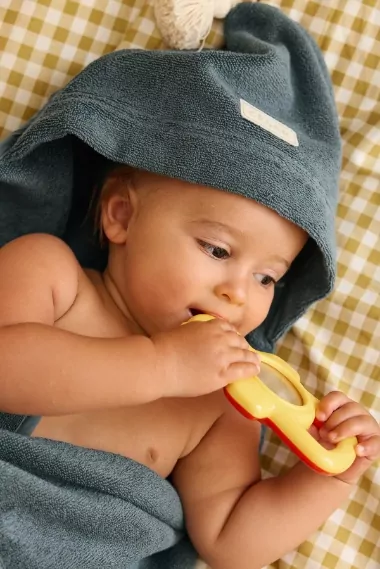
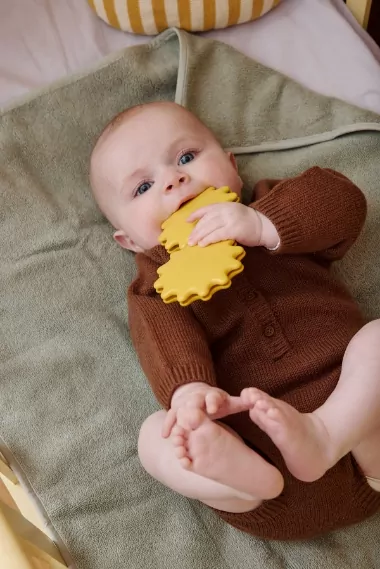
Offer a teething ring

Rubber teething rings are perfect for massaging sore gums. Some can even be placed in the refrigerator for a few minutes to provide a very soothing cooling effect.

Offer age-appropriate cold foods

Depending on your child's age and dietary diversification, cold can help soothe gum inflammation. For example, you can offer:

- a nice chilled fruit purée
- plain yogurt
- a purée straight from the refrigerator
- age-appropriate pieces of fresh fruit

Mistakes to avoid

When baby is in pain, we'd do anything to soothe them. However, certain practices are not recommended.

Anesthetic gels
They can be swallowed by baby and cause choking. It is best to avoid them without medical advice.

Piercing the gum
Even if the tooth seems "ready to come through", you should never pierce the gum. This can cause injuries or infections.

Amber necklaces
Very popular in recent years, amber necklaces nevertheless pose significant risks of choking and strangulation.

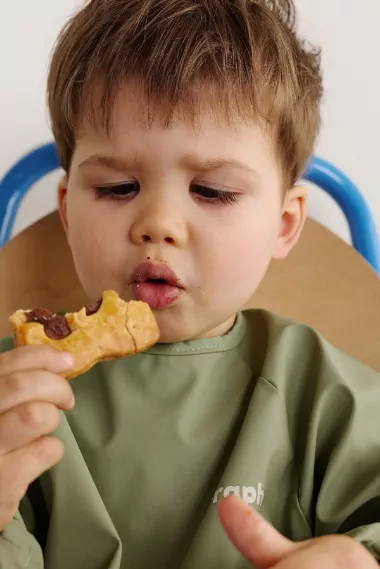
Sweetened teething biscuits
Even if they keep baby occupied for a few minutes, they don't actually relieve teething pain and often contain a lot of sugar, which can promote tooth decay from a very young age.

When should you start brushing baby's teeth?

Oral hygiene starts with the very first teeth… and even a little before! From birth, you can gently clean baby's gums with a clean, damp cloth after bottle feeds. Then, as soon as the first teeth appear: brush them twice a day, starting with a small silicone finger brush, then, around 1 year old, a proper baby toothbrush with extra-soft bristles. Choose a fluoride toothpaste suitable for children under 6.

From the age of 2, your child can start brushing their teeth "all by themselves like a big kid", always under your supervision. In general, a child is not truly independent when it comes to brushing until around 6 or 7 years old.

Teething: a temporary stage

Even if some periods can seem long, teething always passes in the end. With plenty of patience, a few tips and a good dose of cuddles, baby will get through this stage more easily.

Things your little ones say

« I have a big boo-boo, I cried like a daisy. »
– Chloé, 4 years old

« I really love poivrots (leeks). »
– Joséphine, 4 years old

« You're pretty, Mommy, can I have a candy? »
– Camille, 5 years old

AUTHOR

leave a comment

SHARE THIS ARTICLE